| |
Noise in Hospitals
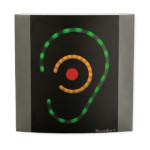
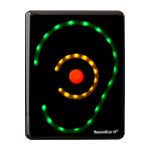
The NoiseSign, with the text SHHH! - Quiet Zone is
the perfect reminder for staff and visitors that they should
keep their noise levels down.
Typical locations for noise warning signs:
- By the nurses station
- Corridors
- At the entrance to each hospital room
- Within each room
The mere presence of the NoiseSign is often reminder enough! |
 |
Why Noise Signs?
Too much noise in a hospital or medical center causes patient
discomfort and can result in longer recovery times. The noise in
question comes from visitors, staff, patients and from the movement
of equipment. Noise Warning Signs take the strain out of reminding
people to keep the noise levels down.
Unnecessary noise is the most cruel abuse of care which
can be inflicted on either the sick or the well.
Florence Nightingale, 1859.
The maximum sound level recommended for hospitals is
45 dB during the day and 35 dB at night.
Environmental Protection Agency, USA.
Noise Signs are most popular in NICU
and neonatal wards, but are valuable on other general and
intensive care units to remind not just the visitors but also
the staff and patients to keep their noise levels down.

Noise Monitoring at the Nurses Station |
Locating the NoiseSign
The perfect location for a sign depends on the layout
and the acoustics of the area in question. The most important
aspect of the NoiseSign is that it reminds people to keep
the noise level down, so it is best to mount them where
they are clearly visible to anybody entering the room or
area. Often the Nurses Station is a good place to position
one unit as this is in view to anybody visiting and also
to constantly remind the staff.
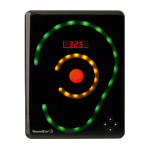
There is no simple rule about the sound level trigger setting.
Hospitals have different ambient noise levels and different
acceptable limits. An intensive care unit will have a much
lower noise threshold than a busy ward dealing with less
critical illnesses. The best way to find the comfortable
limit for an area it to set the sign up to 55 dB, run it
for a few hours, or even a few days, and get a feel for whether
it is being too sensitive for the given environment or whether
it is letting people get away with too much. Adjust up or
down by a few dB as needed. A level of 45 to 55 dB is common
for neonatal and intensive care areas and 50 to 60 dB is
common for other areas, although it does depend a lot on
the acoustics of the areas in question. |
Data Logging Option
 |
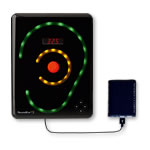
The NS-LOGG Data Logging Module can be
added to the NoiseSign (either at time of purchase or at
a later date). It samples the noise levels on a regular bases,
usually once every second, every 10 seconds or every minute.
This makes it possible to monitor the noise levels over a
longer period of time, to see whether a noise control program
is working and to check when the noisiest times are.
One data logger can be easily moved around between signs
to monitor different areas. |
Ordering Details
The most suitable version of the NoiseSign for monitoring hospital
noise has the order code NS-QZON, which includes
the words "SHHH! - Quiet Zone". The prices and purchasing
options can be seen below. The NoiseSign includes a power supply unit along with a 16ft (5m)
power extension cable.
|
|